
Is your brand a friendly neighbour you say “hi” to every day on your morning run? Or is it a quirky artist that comes to the local fair every year? Maybe it’s more like a reliable mentor — serious and respectful. Your brand can be any of those with the right tone of voice.
Special Tone That Speaks Volumes
Tone of voice is how your brand gets a personality. It’s the way you talk to your audience — your choice of words, sentence structure, disposition, level of respectfulness, and overall writing style.
Here’s a revelation: every post on your social media and message to your client, each post in your blog, and all the pages on your website already have a tone of voice. Right now, by default.
Even if it’s not properly thought out, non-consistent, and neutral, it’s still there. The key is making it work for your audience, creating trust and leaving a lasting impression.
Brand voice VS brand tone
Though brand voice and brand tone sound similar, if we get a bit deeper, they are not quite the same thing. A small difference, but still a difference.
You can say one thing a million different ways. Brand voice is what you want to say, and brand tone is how you end up saying it.
Both brand tone and brand voice should be consistent on all platforms. This is one of their main benefits, after all — building recognition and familiarity, one piece at a time.
Fifty Shades of Tone
With a bit of observation, you will find there are many tone shades to choose from. The most liberating thing is that your options are not set in stone.
You don’t have to be strictly professional or stick to a friendly neighbour persona only.
Many successful brands of various sizes and industries find their voice through mixing and matching until they find the perfect blend.
Friendly and trendy
Warby Parker is an eyewear company targeting young adults 20 to 35 years old, often living in urban areas. Hence, the tone of voice — informal, but not too offhanded, cheeky, or arrogant.

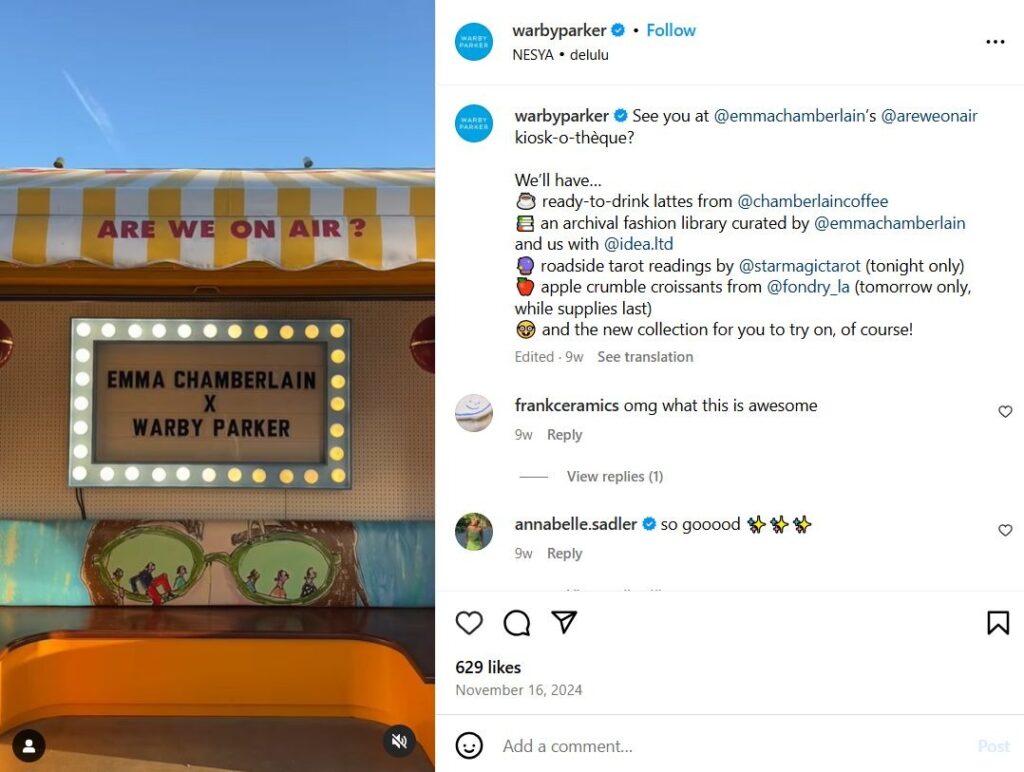
They stick to “just the right amount of informal” to exude a friendly vibe. In their posts they use plenty of emojis, memes, and hop on all the latest trends to appeal to older zoomers and younger millennials.
Expert but approachable
As a bookkeeping and financial services company, you expect Pilot to have an uptight approach.
Turns out, “friendly and light-hearted” works not only for ecommerce — in the right proportion with “trusted & professional”, a bookkeeping company can easily pull it off too.

Without overwhelming clients with jargon, they appeal to startup owners and clients that aren’t too financially savvy.
Edgy and cheeky
Friendly is not always the way, though, and the Cards Against Humanity party game is the perfect example. They get creative with it too, extending their strategy even to the reviews they choose to post on their website.
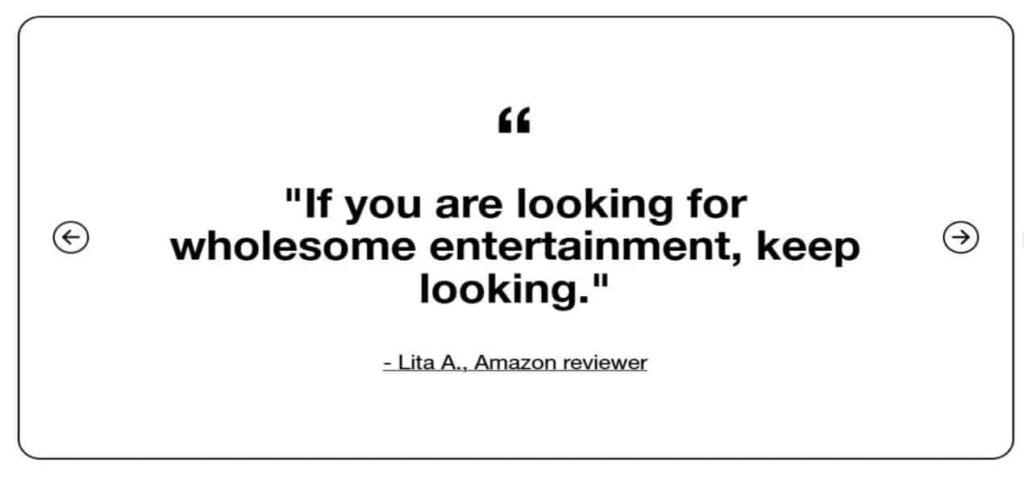
If your industry is filled with brands that position themselves as fun and approachable, going in a completely different direction is your way to stand out.
Nostalgic and refined
Tiffany Leigh Design is an Ontario-based interior design studio. They create elegant and functional living spaces, combining timeless classic aesthetics with a modern touch.
Their tone of voice encompasses just that. Neat and minimalistic, on occasion it becomes more elaborate to set the scene and create the perfect atmosphere.


Their 3-word long home page creates a sense of exclusivity, making clients feel as though they’re about to enter a special space they’ve been personally invited to.
Must-Have or Must-Drop?
Wondering whether you really need to bother with tone of voice at all? A valid doubt, but it also calls for a bit of myth-busting.
It might sound like something reserved for global corporations with hefty marketing budgets. In reality, it’s a low-effort way to get closer to your clients for many types of businesses:
- Retail and e-commerce brands;
- Any customer-centric service provider;
- Small local businesses from landscaping to fitness studios;
- Professional and technical services like law firms or repair shops.
Investing in a tone of voice doesn’t need a big budget either. It’s all about a bit of research and trying to understand your audience better.
How Tone of Voice Helps Brands Get Better & Expand
Having a defined tone of voice is not just a nice little detail to your strategy. It directly impacts key performance metrics, getting you new clients and making the old ones stick around.
Higher Retention Rate
A well thought-out communication strategy means increased loyalty. That, in turn, means higher customer retention rate.
A local bookstore that sends newsletters, filled with witty commentary on trending novels can make readers look forward to every email. However, it won’t work, unless the recipients connect with the letters, feeling a mutual understanding.
Get Recognized
A memorable tone of voice is like your brand’s signature, setting you apart even in the most competitive industries.
“In a sea of mediocre content, a brave tone can be a big differentiator.”
– Ann Handley, Head of Content at MarketingProfs
If your voice is distinct, your brand lives rent-free in your audience’s mind. When consumers can identify your brand from a single tweet or tagline, that’s when you know you’ve mastered the art of it.
How To Find Your Brand’s Tone?
And how to strike just the right chord? If you decide to invest a bit of time into tone of voice development, make sure you understand your audience well. You need to “resonate with” and “be understood by” them.

Get to Know Your Clients
Think about your target audience. Who they are, what they do, what are their interests, desires and fears. What language do they speak, which slang or jargon use, which generation they pertain to?
A Gen Z digital artist speaks a language entirely different from that of a boomer-gen executive. Develop detailed buyer personas to know exactly who you need to appeal to.
Set Brand Values
Having gathered audience insights, you can get to your brand’s values. Make sure they align with the values of your audience. Are they passionate about sustainability? Do they put innovation above all? Maybe they appreciate non-conformity or they’re sticklers to traditional values instead?
A Canadian brand selling baby potatoes, shockingly called The Little Potato, has its tone of voice built around sustainability, community, and family values.
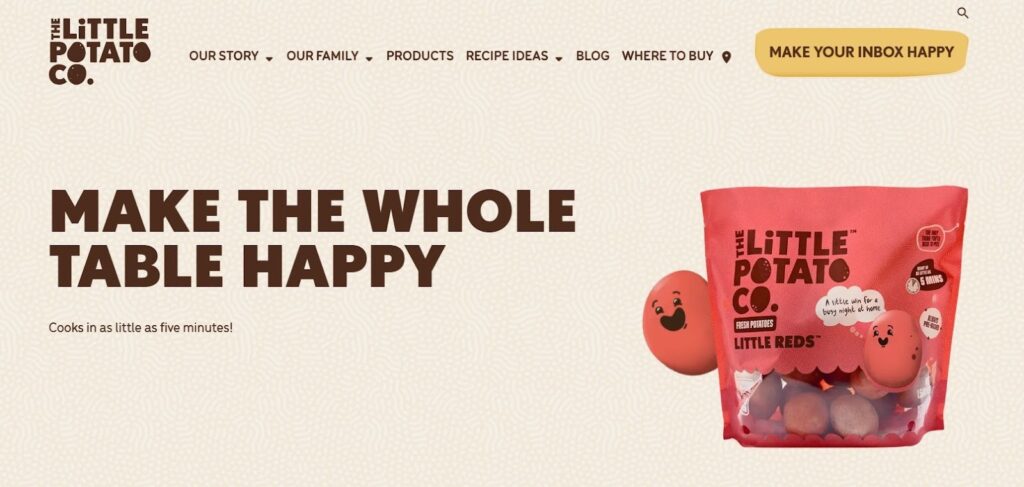
They convey a sense of togetherness and excitement through their heart-warming tone of voice, ever-present on every page of the website. This passion is infectious particularly for their target audience of health-conscious families and middle-aged people from 25 to 55.

It’s an example when the tone fits the brand just right and gives off cozy, homey energy with every word.
Create a Guide
Include buyer personas in the guide — it will make it easier for your employees to understand who they are talking to. List out all the dos and don’ts too, illustrating them with examples.
In the end, your guide can look something like this:
| Fake Mustache Rentals Tone of Voice Guide | |
|---|---|
| Brand overview | At Fake Mustache Rentals, we rent out a variety of fake mustaches and believe that life is too short to take yourself seriously. |
| Target audience | Party planners, event hosts, and anyone looking to add a bit of humor to their lives. |
| Language guidelines | Conversational tone — straightforward and unserious |
| On-brand example | Side effects may include spontaneous laughter and an overwhelming desire to take selfies;We’re not saying you need a fake mustache to live your best life, but why take that risk?;Want to convince your friends you’re secretly French? We’ve got the perfect ‘stache for that. |
| Off-brand example | Our team offers high-quality facial hair products;We guarantee that our mustaches will meet all your expectations for quality and style. |
A detailed guide will come in handy both during the strategy development, the implementation stage, and later on, when you have new employees coming in.
Fill out this short template or expand your guide with more examples, detailed audience descriptions, or even words that you should never use when representing your brand.
Conclusion
Developing a tone of voice helps your business in more ways than one. As luck would have it, this is also not a task that takes up all of your team’s time and energy.
Speaking the same language as your clients will surely pay off — no matter if it’s a coffeshop, automotive business, a clothing store, or a law firm.